

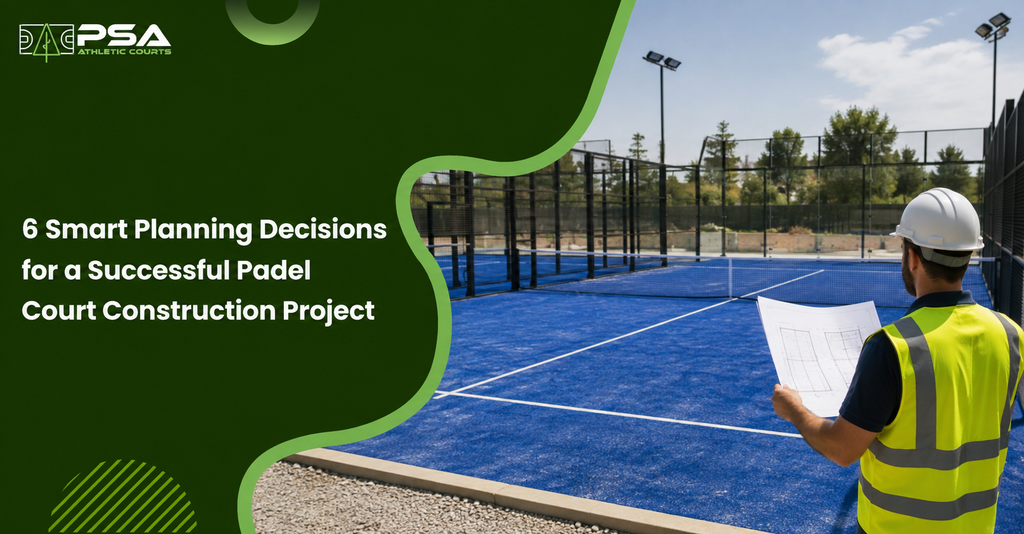
A padel court can become a valuable addition to a sports club, hotel, residential development, school, or recreation facility. But a successful project is not simply about fitting a court into an available space. Decisions made during the planning stage can influence construction costs, user experience, operating expenses, and future expansion.
If you are considering padel court construction, thinking beyond the basic specifications can help you create a facility that delivers greater long-term value. Here are six less-obvious factors worth considering before construction begins.
1. Define How the Court Will Actually Be Used
Start with the intended use of the court rather than the construction itself. A private residential court, hotel amenity, commercial padel club, and community facility can have very different requirements.
Consider how many players are expected, how frequently the court will be booked, and whether it will host tournaments, coaching sessions, or casual games.
Higher-use facilities may need more durable materials and easier access for maintenance. Defining the expected usage early helps you avoid paying for features you do not need while ensuring the court can handle its intended workload.
2. Plan Around the Player Experience
A technically correct court can still provide a poor experience if the surrounding environment has not been considered.
Think about player circulation, spectator areas, entrances, seating, changing facilities, storage, and viewing angles. If several courts are being developed, consider how players will move between them without disrupting games.
Noise and privacy may also matter, particularly for residential developments, hotels, and mixed-use properties.
An experienced padel court builder can help integrate these surrounding elements into the overall layout instead of treating the court as an isolated structure.
3. Decide Whether You Need One Court or Room to Grow
One of the most overlooked planning questions is whether today’s project could become tomorrow’s larger facility. Understanding how big is a padel court and allowing enough surrounding space can help you plan for future expansion more effectively.
If demand is expected to increase, reserve appropriate space for additional courts, walkways, seating, lighting, parking, or other amenities. Installing a single court without considering future expansion may make later development more expensive or impractical.
Even if you are starting with one court, designing the site with future possibilities in mind can provide greater flexibility.
4. Understand the Total Project Budget
The quoted court construction price does not always represent the complete project cost.
Your budget may also need to account for site preparation, foundation work, electrical connections, lighting, drainage, access improvements, landscaping, permits, seating, signage, and other facility requirements.
Create a complete project budget before construction begins. Separating the cost of the court itself from supporting site and facility work gives you a more realistic picture of the total investment.
This approach also makes it easier to identify where spending more could provide meaningful long-term benefits.
5. Match the Court Design to Your Brand and Property
For commercial facilities, a padel court can be more than a place to play. It can become part of the property’s identity.
Hotels, resorts, clubs, and residential developments may want the court to complement their existing architecture and landscaping. Court colors, surrounding finishes, signage, spectator areas, and landscaping can all contribute to a cohesive appearance.
A professional padel court builder can help coordinate the technical requirements with the visual goals of the property, creating a court that feels intentionally designed rather than simply installed.
6. Plan for Operations Before Construction Starts
Ask how the court will operate once construction is complete.
Will players reserve sessions online? Who will inspect the court? Where will equipment be stored? How will cleaning and routine maintenance be handled? Will staff need access to lighting controls or other systems?
For commercial facilities, these operational details can have a direct impact on efficiency and customer satisfaction.
Planning access, maintenance procedures, equipment storage, and future repairs during the padel court construction stage can make day-to-day management significantly easier.
Planning your padel court project? Explore our Padel Court Construction Guide for expert tips on design, construction, surfaces, and costs.
Make Planning Part of the Investment
The best padel projects are designed around more than the court itself. They consider how people will use the facility, how the property may evolve, what the complete investment will cost, and how the court will operate after construction.
By making these six decisions early, property owners and facility managers can reduce surprises and create a more practical long-term plan.
Partnering with an experienced padel court builder can also help turn those plans into a court that balances performance, appearance, usability, and long-term value.
