

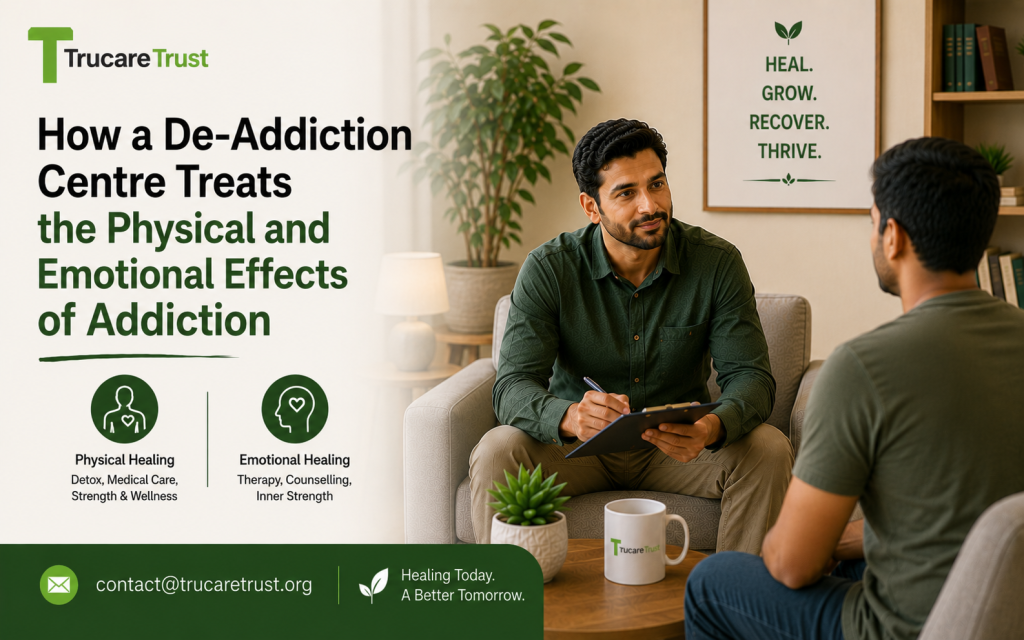
Addiction affects far more than the body’s response to alcohol or drugs. It can disturb sleep, appetite, mood, judgement, relationships and a person’s sense of control. Effective addiction treatment in India should address physical and emotional difficulties together because improvement in one area can be weakened when the other is ignored.
Assessing the Complete Picture
Treatment begins with a detailed history of substances used, frequency, route, last use, withdrawal, overdose and previous attempts to stop. Clinicians should also examine nutrition, sleep, pain, infections, liver health, prescribed medicines and other physical conditions.
The emotional assessment considers depression, anxiety, trauma, psychosis, self-harm risk, grief and cognitive difficulties. Family conflict, work pressure, housing and financial problems can influence both substance use and recovery.
Progress should be reviewed through physical and emotional indicators. Reduced withdrawal does not necessarily mean that anxiety, sleep problems or cravings have settled. Likewise, improved mood may not resolve medical complications. Coordinated reviews help clinicians notice these differences and prevent one improvement from hiding another continuing risk.
Managing Physical Dependence
Withdrawal symptoms vary. Alcohol or sedative withdrawal may cause seizures, hallucinations or severe confusion. Opioids can cause body pain, vomiting, diarrhoea and intense cravings. Stimulant withdrawal may involve exhaustion, low mood or suicidal thoughts.
A qualified clinician should determine whether detoxification is required and prescribe medication when appropriate. Monitoring may include pulse, blood pressure, hydration, nutrition, sleep and mental state. Serious complications require urgent medical care or transfer to a suitable facility.
Regular meals, rest, exercise and treatment of medical problems help rebuild physical stability. These measures support recovery but should not be presented as substitutes for clinical treatment.
Addressing Emotional Pain
Some people use substances to escape fear, grief, trauma, loneliness or shame. Others develop emotional symptoms as substance use becomes more severe. Counselling helps identify these connections without assuming that every difficulty has the same cause.
Cognitive and behavioural approaches can improve emotional regulation, problem-solving and responses to cravings. Motivational counselling helps the person examine uncertainty and personal reasons for change. Trauma-focused work should begin only when the person is stable and ready.
Depression, anxiety or psychosis may require psychiatric assessment and medication. Such symptoms should not be dismissed as attention-seeking or lack of discipline.
Rebuilding Relationships and Daily Functioning
Addiction often damages trust, finances and communication. With consent, family sessions can establish boundaries and reduce enabling. Relatives may support food, transport, treatment costs and appointments while declining to provide unmonitored cash.
Residents may also need help returning to work, rebuilding routines and handling social situations where substances are available. Small, consistent changes are more sustainable than unrealistic expectations of immediate transformation.
Connecting Physical and Emotional Recovery
Poor sleep can increase irritability and cravings. Anxiety may worsen physical discomfort, while pain can trigger renewed use. Treatment plans should therefore review both types of symptoms and adjust care when one begins affecting the other.
Aftercare may include counselling, medication reviews, peer support, medical follow-up, exercise and family guidance. A lapse should prompt assessment of physical health, emotional triggers and environmental risks.
Before choosing addiction treatment in India, families should verify medical supervision, qualified counselors, emergency arrangements and continuing care. Effective treatment restores health and emotional stability through coordinated, respectful support rather than detoxification, discipline or isolation alone.
