

Ruffles can make a dress feel lively without using heavy decoration. They move as the wearer walks and can soften a simple shape. Yet a ruffle is not only a visual detail. Its size, weight and position affect comfort, fit and the way a dress behaves through the day.
The best choice is not the dress with the most dramatic ruffle. It is the one in which the detail works with the fabric and the intended setting. A light ruffle may suit a warm afternoon. A sharper, structured ruffle may feel right for an event but less useful for long sitting hours.
Read the placement before judging the dress
A ruffle draws the eye to the area where it sits. A shoulder ruffle adds width and movement near the face. A neckline ruffle becomes the main feature of the upper half. A ruffled hem places the focus lower and becomes more visible while walking.
None of these placements is automatically flattering or unsuitable. The practical question is whether the detail remains in place. A neckline should not collapse or turn outward. A sleeve ruffle should not rub against the arm. A hem ruffle should allow a natural stride without catching around the legs.
Check the dress from the side and back as well. A detail that looks balanced from the front may add more volume on one side or sit unevenly at the back. This may be intentional, but it should still look controlled.
Understand what asymmetry changes
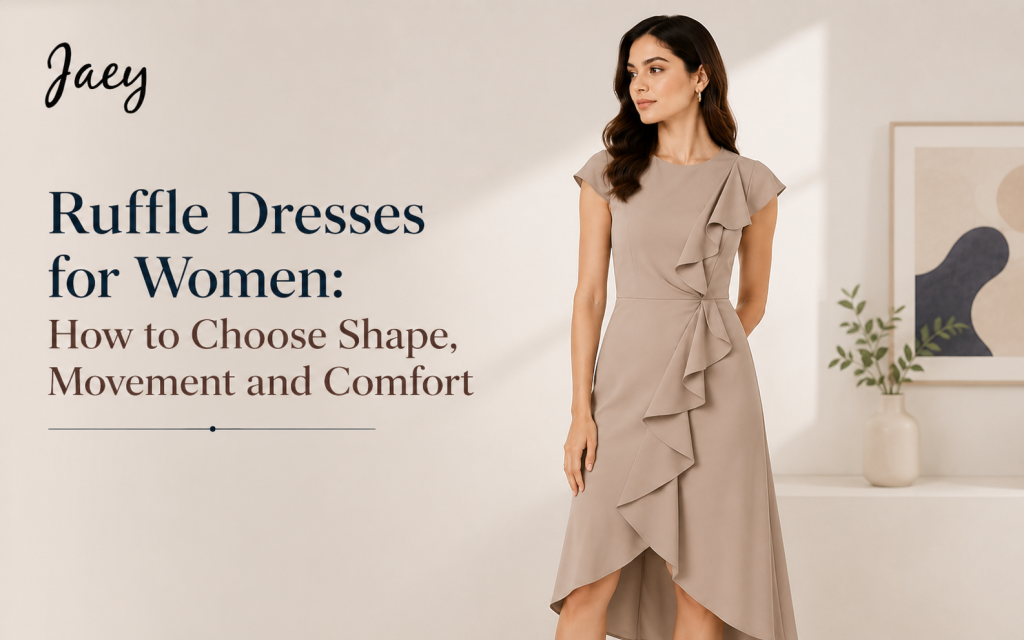
An asymmetrical ruffle dress for women uses an uneven line to create movement. The ruffle may fall diagonally, sit on one shoulder or change length across the hem. This can make a solid dress feel distinctive without a print.
Asymmetry needs a stable base. The centre seam, waist and shoulder should stay in place while the decorative line moves around them. If the whole dress twists, the effect can look accidental rather than designed.
Sit down before deciding on length and coverage. A diagonal hem may rise much higher on one side when seated. Walk, turn and use stairs if possible. The shorter point should remain comfortable during normal movement.
Decide how much print the ruffle can carry
A floral print and a ruffle both add detail. They can work together when the scale is controlled. A floral ruffle dress for women may use a small scattered print, which gives the fabric texture from a distance without creating one large focal point.
Small prints are not compulsory for any body size. Larger florals can look equally balanced when the colours are limited and the ruffle is simple. Problems begin when a large print, several ruffle layers and a complex neckline all compete for attention.
Look at how the print meets at seams. Perfect matching is not always possible on gathered fabric, but important lines should not appear broken or careless. The print should also remain clear when the ruffle folds.
Fabric controls the final effect
Soft georgette, chiffon and light crepe create fluid ruffles. They move easily but may need lining because thin fabric can become transparent. The lining should allow the outer layer to move rather than pulling it flat.
Cotton and firmer blends create a clearer edge. They may feel cooler, though a large gathered section can still trap heat. Stiff fabric produces a bold shape but may brush against the face or arm. It can also occupy more space under a jacket.
Crush a small section of fabric in the hand and release it. This gives a quick idea of how the dress may crease after sitting. Also listen while moving. Some crisp synthetic fabrics make noticeable sound, which may matter in a quiet workplace.
Judge fit on a moving body
Start at the shoulders and bust. A ruffle can hide pulling, so look closely at the base fabric beneath it. Deep horizontal lines, gaping armholes or a neckline that shifts are signs that the fit needs attention.
Raise the arms and reach forward. The dress should not lift sharply or drag the ruffle into a different position. If the style has a defined waist, sit for several minutes. The seam should remain near the natural waist without pressing into the body.
Check the zip, buttons and inner seams. A side zip should lie flat. A back zip should move smoothly past gathered sections. Rough edges under a ruffle can irritate the skin even when they are not visible.
Match the dress to the occasion
For office use, restrained colour and a secure neckline often make a ruffled dress easier to repeat. A blazer can add structure, but it should not crush a shoulder or sleeve ruffle. A light cardigan may sit better when the dress already has volume.
For dinners or events, a stronger hem or neckline can carry the outfit with very few accessories. Shoes and a bag do not need to copy the dress colour exactly. A quiet neutral or one shade taken from the print usually feels more considered.
The dress should still feel natural to the wearer. A dramatic detail can look excellent but become tiring if it needs constant adjustment. Personal comfort is a better guide than a rule about age, size or body shape.
Consider care before buying
Ruffles need more care than a plain straight edge. Washing can crush the shape, while hard ironing can flatten gathers or damage light fabric. Read the label and check whether steaming is suitable.
Inspect the stitching where the ruffle joins the dress. This area handles movement and can weaken if the seam is narrow or uneven. Loose threads, puckering and stretched fabric are worth noticing before purchase.
A well-chosen ruffle dress should offer more than a striking photograph. It should move well, sit comfortably and keep its shape after care. When placement, fabric and fit work together, the detail feels expressive without making the dress difficult to wear.
