

The living room used to sit still. Furniture arrived on a truck, took its place along a wall, and stayed there for a decade. That quiet permanence made sense when homes rarely shifted purpose, but modern rooms rarely stand still anymore. A weekday afternoon becomes an office, then a playroom, then a movie den by nightfall. Against that reality, a fixed sectional starts to feel less like a comfort and more like a constraint. This is where the debate opens up: hold on to the classic one-piece frame, or move to a layout that rearranges as easily as the life around it. The modular sofa is not a trend chasing novelty. It is a response to how people actually live, entertain, downsize, upsize, and rethink space. In the sections that follow, we look at what really changes when a sofa learns to move, and why the answer is rarely as simple as choosing sides.
The Case for a Sofa That Stays Put
There is a straightforward argument for a traditional sectional. It looks decisive. The silhouette is unified, the seams are continuous, and the visual weight anchors a room in a way that separate pieces sometimes cannot. For rooms with strong architectural cues, deep bay windows, symmetrical fireplaces, formal openings, the fixed sofa reads like a punctuation mark. It closes a sentence rather than leaving it open.
But the strengths of a traditional frame are also its costs. Once the couch is in place, the layout is essentially decided. Move to a new home and the geometry rarely repeats. That corner where the L-shape sat perfectly? It doesn’t exist in the next apartment. A sectional that was tailored to a room becomes furniture in search of a room. The very continuity that made it feel confident begins to work against it.
Compared to that, a modular sofa takes the opposite bet. It gives up the illusion of permanence in exchange for adaptability. Each piece is designed to stand alone or to lock in with neighbors, so the whole is really a family of parts that can meet in different formations. That difference is not cosmetic. It changes how a household plans, buys, and lives with the largest piece of furniture in the room.
What Modularity Actually Buys You
People often picture modular design as endless reconfiguration for its own sake, but the real value is quieter and more practical. It is the ability to answer real-life questions without a shopping trip. A new baby means the coffee table has to go and a bumper chaise has to arrive. A move across town means a sprawling U-shape has to become a tight L. A partner brings a bigger television and the sightlines have to shift. A modular system lets the sofa respond to those questions instead of forcing the room to work around it.
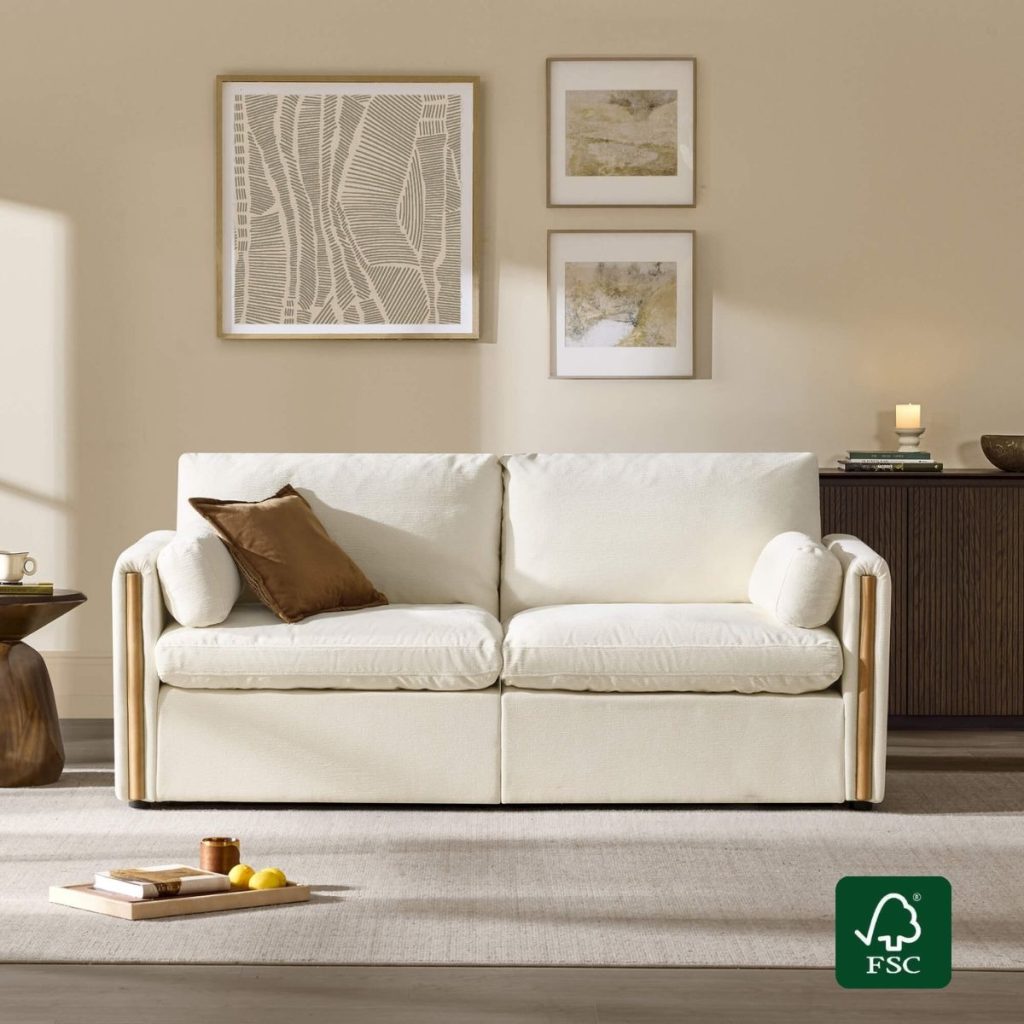
There is also a psychological dividend that is easy to overlook. A living room that can be rearranged, even a little, tends to feel more like a place where things happen and less like a museum you clean around. Guests coming over on Friday means the two-seat and chaise can swing to face the window. A quiet Sunday morning turns the same pieces inward so the family reads and drinks coffee in a huddled cluster. The room does not need repainting or reflooring to feel new. The sofa simply moves, and with it, the mood.
Where Traditional Wins, and Where It Doesn’t
None of this is meant to bury the traditional couch. A single-frame sofa still has a place, especially in rooms that will not change and in households that treasure a specific silhouette. Tufted chesterfields, low-slung mid-century sofas, tightly built loveseats: these are objects with a point of view, and part of their appeal is that they refuse to be diplomatic. If you know the room, and you know the sofa, and neither is going to move, the fixed piece can still be the right piece.
The problem is that many people do not have the luxury of knowing. Renters change apartments. Homeowners renovate. Families expand and contract. Remote workers turn corners of the living room into offices for a few years and then reclaim them. In all of these situations, a modular sofa is less of a compromise and more of an insurance policy. It hedges against the versions of your life you have not yet imagined.
Comfort Is Not a Casualty
A common worry about modular pieces is that flexibility costs comfort. If the sofa is designed to be taken apart, the reasoning goes, it must sit like a shipping crate. This might have been fair when modular design was still finding its footing, but it is not the case now. Well-built modular systems use the same seat cushions, the same feather-and-foam blends, the same tight upholstery techniques as their traditional cousins. The difference is what happens at the seams, where quiet connectors do the work that fixed frames used to do with glue and hardwood.
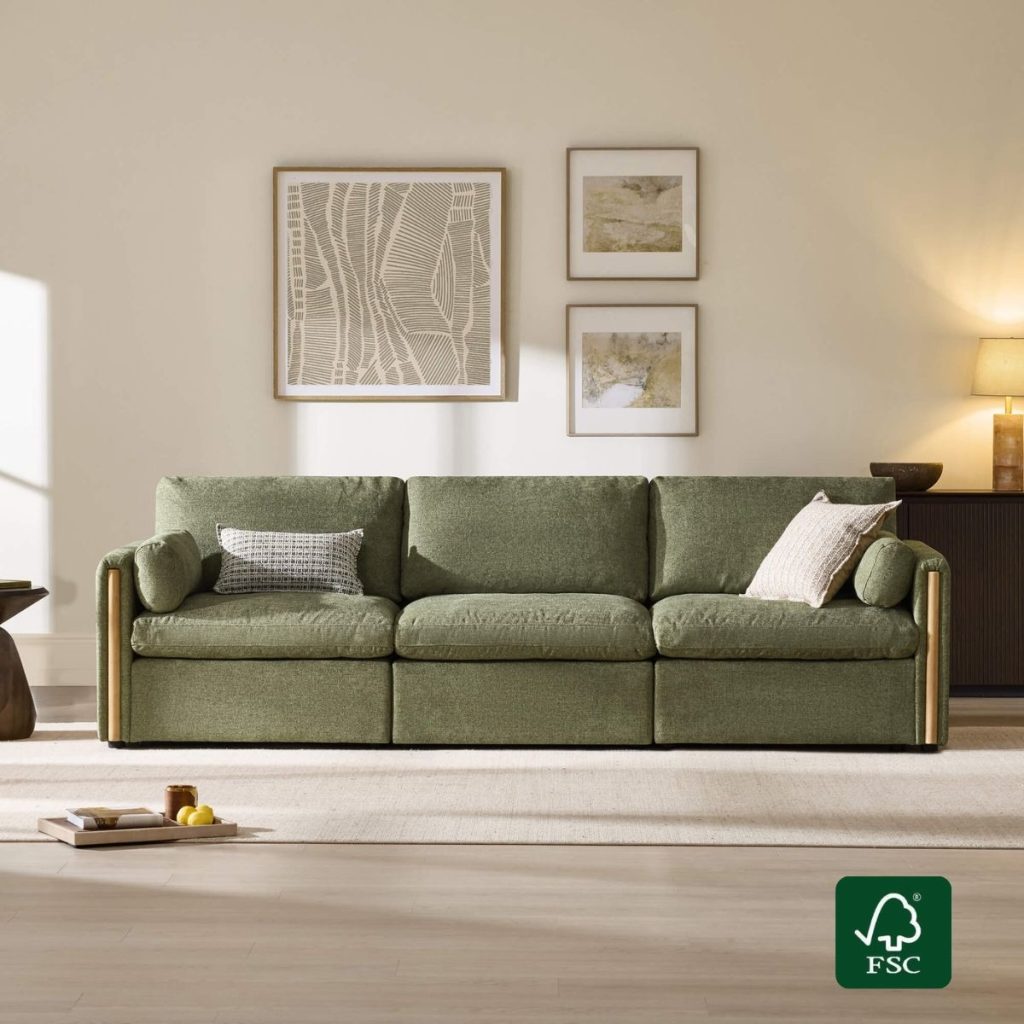
The best modular sofas actually make comfort more accessible, not less. Because sections can be moved independently, the deep-seated lounge chair position, the arm-supported reading nook, the feet-up chaise, all of these can be pulled together on demand instead of being permanently sacrificed to one arrangement. Brands like CHITA LIVING have leaned into this idea by pairing thoughtful proportions with fabrics like chenille that feel as substantial as a traditional sectional while still allowing the pieces to move.
The Long Game of Ownership
There is a longer horizon worth thinking about too. A sofa is one of the largest, heaviest, and most expensive pieces most households buy. Replacing one is not just about money. It is about disposal, delivery, matching, and remorse. Traditional sofas tend to live one life. When the room outgrows them, they leave. Modular pieces are structurally different in this regard. If a single section is damaged, worn, or simply out of favor, it can be swapped without touching the rest. If the household adds a room, sections can be split. If it downsizes, the arrangement can compress without a full replacement.
That is a quiet kind of sustainability, and it changes the emotional relationship with the piece. You are not buying a monument. You are buying a system that ages with you. Some of the units introduce genuinely useful storage inside the seats, so the sofa also learns to hold blankets, controllers, and the small clutter that would otherwise migrate to a coffee table. None of this is glamorous, and that is exactly the point. Good modular design tends to disappear into daily life rather than demand attention from it.
Choosing Between the Two
So how should someone decide? Start with the room, but do not stop there. If the space is architecturally fixed and unlikely to change, a traditional silhouette will feel confident. If the space will do many jobs, or if the household itself is in a season of change, modular design is quietly the more forgiving choice. Also think about how you host. People who entertain in small clusters, in movie nights, in board-game marathons, or in overnight guests, tend to benefit from a sofa that can face inward, outward, or into an ottoman bed. People who host formally, with fixed seating arrangements, are often happier with a piece that has already made up its mind.
The clearest sign a modular sofa is right for you is that you find yourself dreaming about rearranging the room. If, when you look at the space, you keep imagining what it could look like with the couch turned this way or split that way, a fixed piece will always feel a step behind your imagination. A modular one will follow it.
Living Room Furniture That Moves With You
The choice between a fixed sofa and a modular one is less about aesthetics and more about how confident you are in the permanence of your life. If everything about your home is settled, a traditional sectional will serve you well and look wonderful doing it. But if your household is still writing its story, adding people, changing rooms, redefining what the living room is for, then a sofa that can change with you is not a compromise. It is the more honest answer. A well-considered modular design gives you the anchor of great seating without the anxiety of a decision you cannot undo. Whether the choice lands with CHITA LIVING or another maker who understands the same principle, the point is the same: the best sofa is not always the one that stays still, but the one that stays with you.
