

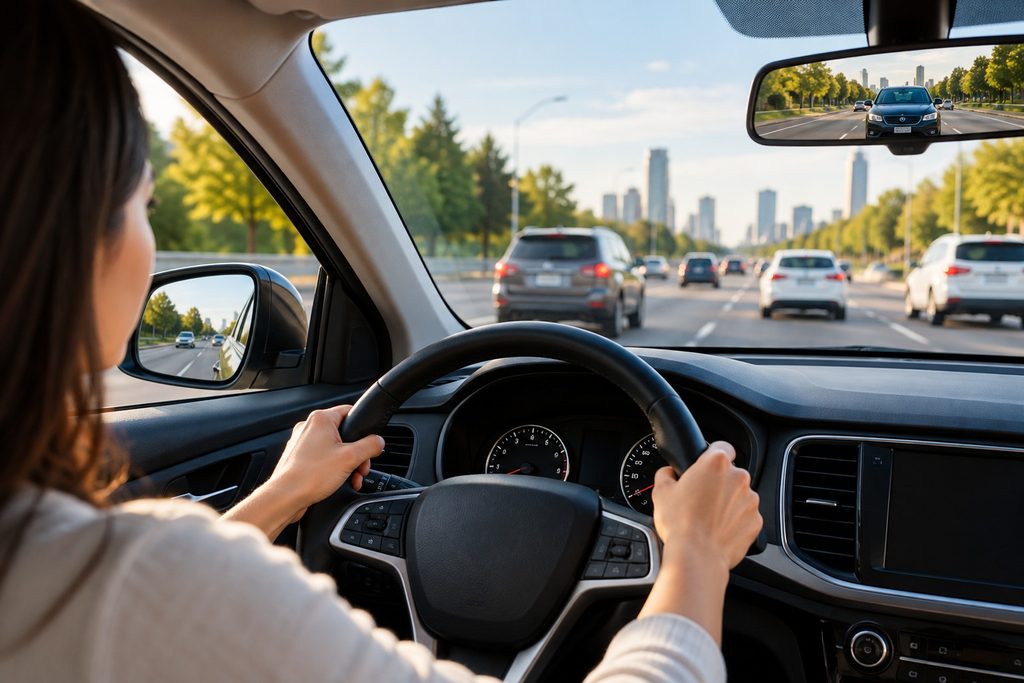
There are five new driver safety tips that can make driving after getting licensed safe in traffic.
1. Controlling Your Speed
- Good speed control means following the limit, and also driving at a speed that gives you time to stop your car safely. According to Ontario Ministry of Transportation, drivers should drive below the maximum speed limit when weather is not good, traffic is heavy, or they are driving through construction sites.
- It is important for a newly licensed driver to control their speed because it helps in being mindful of gaps and keeping braking distance. When a driver drives too fast, it reduces the time to notice a pedestrian, a car merging ahead, or noticing the brake lights.
- Controlling your speed is one of the most useful safe driving techniques because it helps you in braking, turning, and changing lanes safely.
- For example if the speed limit is 50 km/h on a wet street, 50 is still too fast if you can not see properly due to weather conditions.
2. Protect your following distance
- When you keep a good following distance, it gives you time to stop when the vehicle which is in front of you stops suddenly. The MTO driver’s handbook of Ontario suggests a minimum of two seconds gap.
- Keeping two seconds gap is minimum. Increase the gap in rain, snow, fog, darkness, or when you are driving behind a large truck or motorcycle. These situations can affect the visibility ahead so we should keep more distance.
- For example, if you are driving behind an SUV during rush hour, avoid driving too closely to it. Leave space so you are able to see its brake lights and also observe the traffic flow ahead if possible. This improves road awareness and helps in preventing sudden braking.
- Keeping a following distance is also an important part of defensive driving habits. It gives you choices in braking safely and changing lanes safely.
3. Check mirrors and blind spots
- When you do mirror checking regularly, it keeps you aware of traffic from all sides. MTO advises drivers to observe the road properly, look on the sides, and checking mirrors after every five seconds. Before you change the lane, you should always check the blind spot by looking over your shoulder as only mirrors cannot show every vehicle.
- If you create this simple habit, it will help you in driving: Look ahead, check the rearview mirror, check side mirrors, and then again return your focus to the road. You should not look away from road for a long time just quick glances are perfect.
- For example, before you move into the right lane for an exit, check your mirror, give signal, look over your shoulder, and then move if you find the lane clear.
- Using mirrors is also important in heavy traffic. Cars change lanes frequently, the cyclists and drivers behind you may be too close. Checking traffic constantly improves traffic safety.
4. Signal early and clearly
- The proper use of turn signals is done before slowing down, stopping, turning, or changing lanes. Give the signal before you perform your action so others get time to respond.
- Along with giving signals, you should still check mirrors, look at the blind spot, and still make sure that the path is clear before you move.
- For example, you are turning into a parking of grocery store. Give the signal early instead of braking first and then signalling at the entrance. The driver behind you will have more time to respond.
- Giving clear signals is also a form of defensive driving.
5. Remove distractions before moving
- For distracted driving prevention, you should put your phone away, activate navigation directions before starting to drive, and avoid serious conversation when there is traffic
- If you need to attend an emergency call or message, pull over and park safely first.
