

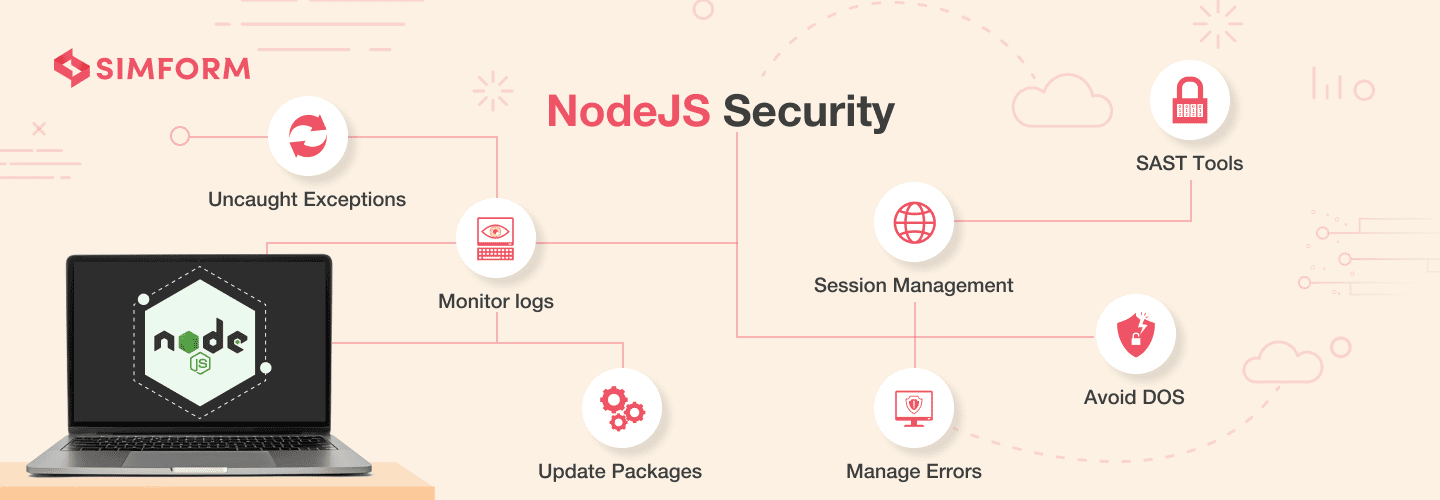
Enterprise web apps handle a lot of sensitive work. They manage customer data, payment flows, internal dashboards, user records, APIs, and business logic. Because of this, security cannot be added only at the end. It should be planned from the start.
The Node.js permission model gives development teams a safer way to control what an application can access while it is running. This is useful for companies that want better backend security, cleaner access control, and fewer risks from unwanted file, network, or system-level operations. For modern businesses, this feature is not just a technical upgrade. It helps protect trust, reduce security gaps, and support long-term digital growth.
What the Node.js Permission Model Really Means for Web Apps
This is a security feature that lets developers limit what a Node.js process can do. When enabled, it can restrict access to areas like files, network connections, child processes, worker threads, native addons, and other sensitive resources.
In simple words, it helps answer this question:
Should this application be allowed to access this resource?
Without this kind of control, an application or third-party package may get more access than it actually needs. That can create risk, especially in enterprise systems where many packages, services, and APIs work together. With controlled runtime permissions, teams can give the app only the access it needs to perform its job. This follows the idea of “least privilege,” which means giving minimum access instead of open access.
This helps businesses build applications that are:
- Safer by design
- Easier to monitor
- More controlled in production
- Better prepared for audits
- Less exposed to package-level risks
- More reliable for enterprise use
How the Node.js Permission Model Works Behind the Scenes
It works by using a command-line flag when starting the application. Once it is enabled, access to sensitive resources is restricted unless the developer allows it clearly. For example, an app may need to read files from one folder but should not access the whole system. Developers can allow only the needed path instead of giving full file access.
A simple security flow may look like this:
- Enable access restrictions during app startup
- Allow only required file paths
- Block unnecessary write access
- Control network access where needed
- Restrict child process usage
- Review package behavior during testing
- Monitor errors caused by blocked access
This helps teams catch risky behavior early. If a package tries to access a file or system resource that it should not use, the app can block it. That gives developers more visibility and control.
For enterprise teams, this is helpful because large applications often use many dependencies. Even trusted packages can create problems if they are outdated, misconfigured, or compromised. Permission controls add one more safety layer around the backend environment.
Why Enterprises Should Care About Safer Node.js Backends
Enterprise applications usually grow over time. New features are added, APIs are connected, cloud services are integrated, and more users depend on the system. As the backend grows, security becomes harder to manage.
A strong backend should not only be fast. It should also be safe, stable, and easy to maintain.
A Node JS web development company can help businesses design backend systems where security, performance, and scalability are planned together instead of being treated as separate tasks.
The main value comes from reducing unknown risks. When access is clearly limited, the business gets better protection against accidental misuse, unwanted dependency behavior, and unnecessary system exposure.
Key business advantages include:
- Lower risk of data exposure
- Better control over backend resources
- Stronger protection for sensitive systems
- Cleaner security reviews
- Safer use of third-party packages
- More confidence during production releases
- Better alignment with enterprise compliance needs
This is especially important for industries like fintech, healthcare, logistics, SaaS, ecommerce, and enterprise software, where backend reliability and data protection are directly connected to business reputation.
Business Value of the Node.js Permission Model in Real Projects
The Node.js permission model can improve how teams plan and run backend applications. It encourages developers to think clearly about what the app actually needs. Instead of allowing everything by default, teams can define access rules based on real use cases. This makes the backend more organized and easier to secure.
For example:
- A reporting tool may only need read access to report files.
- A payment service may not need file system write access.
- An API service may only need network access to selected services.
- A worker process may not need access to child processes.
- A public-facing app may need stricter limits than an internal tool.
These choices help reduce the attack surface. That means there are fewer ways for something to go wrong.
A Backend development company can use this approach to build enterprise-ready systems that are easier to test, secure, and maintain as business needs grow.
For decision-makers, the benefit is simple: stronger backend control leads to fewer security surprises, better system confidence, and smoother growth.
ROI Gains from the Node.js Permission Model
This model can support return on investment by reducing preventable costs. Security problems are expensive. They can cause downtime, customer loss, legal issues, emergency fixes, and brand damage.
When businesses invest in safer backend planning, they reduce these risks before they become serious.
The ROI can come from:
- Fewer emergency security fixes
- Lower risk of system misuse
- Reduced downtime from unsafe behavior
- Faster issue detection during testing
- Better developer productivity
- Lower long-term maintenance cost
- Improved trust with enterprise clients
- Stronger readiness for audits and reviews
It also helps teams avoid overbuilding security later. Fixing access problems after launch can take more time and money than planning them early. By adding access limits during development, businesses can create a cleaner and safer foundation.
Pattem Digital helps businesses improve backend security planning by building Node.js solutions with structured access control, scalable architecture, and practical validation that supports enterprise web app growth.
Practical Ways to Use It in Enterprise Development
Businesses do not need to apply everything at once. A step-by-step approach works better.
Here are simple ways to start:
- Review what resources your app needs.
- List file read and write requirements.
- Check network access requirements.
- Identify risky third-party packages.
- Test access limits in staging first.
- Start with non-critical services.
- Document allowed access clearly.
- Train developers on secure defaults.
- Monitor blocked access errors.
- Update rules as the app grows.
The goal is not to slow development. The goal is to make development safer and more predictable. When teams know what an app can and cannot access, debugging and security reviews become easier.
What Businesses Should Keep in Mind
This feature is useful, but it should not be the only security layer. Enterprise apps still need secure coding, authentication, authorization, input validation, logging, monitoring, dependency checks, and cloud security.
Think of it as one important layer in a larger security plan.
Businesses should also remember:
- Test carefully before using it in production.
- Keep Node.js versions updated.
- Review access needs for every service.
- Avoid giving broad permissions without reason.
- Combine it with existing security practices.
- Make access control part of development culture.
When used correctly, Node permission controls can help teams build with more confidence and fewer blind spots.
A Smarter Way to Secure Enterprise Web Apps
The Node.js permission model gives enterprise teams a practical way to control backend access and reduce unnecessary risk. It helps developers build safer applications by limiting what a running process can access.
For businesses, the value is clear. Better backend control can improve security, reduce maintenance costs, support compliance, and protect customer trust. It can also improve ROI by preventing avoidable problems before they become expensive.
As enterprise web apps become larger and more connected, security must become more focused and practical. This approach helps companies build backend systems that are not only powerful, but also safer, cleaner, and ready for long-term growth.
